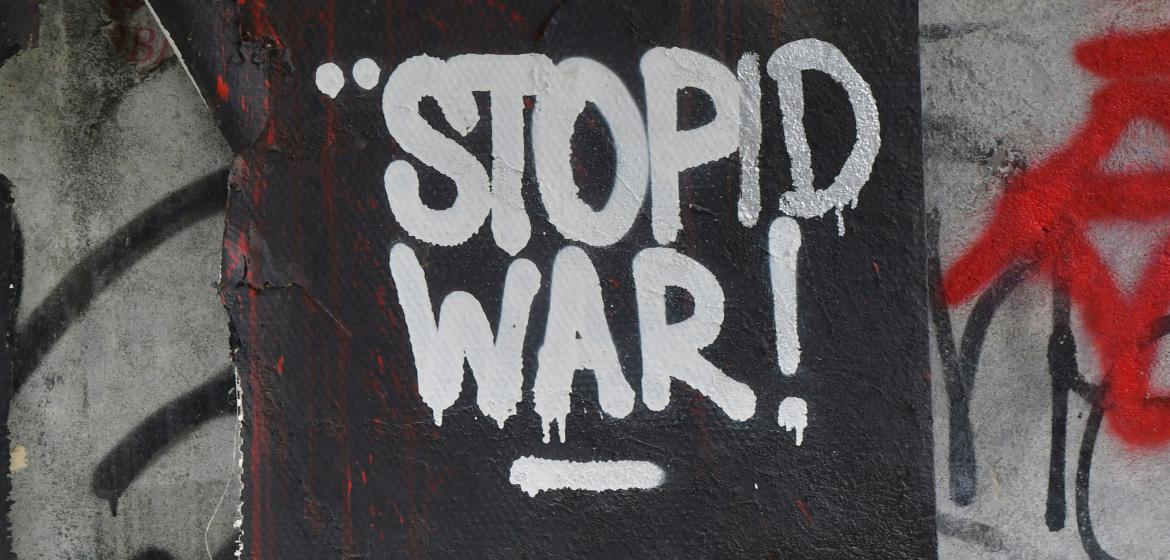
How can we oppose imperialist wars and foreign intervention without defending authoritarian regimes? And how can we build internationalist solidarity rooted in people's struggles rather than the interests of states?
During the US-led invasion of Iraq in 2003, parts of the Iraqi left insisted on the slogan “No to war, no to dictatorship”—rejecting both the invasion and Saddam Hussein's authoritarian rule. Today, this position offers an important starting point for opposing US and Israeli military intervention while standing in solidarity with struggles against authoritarianism and repression across the region.
Political developments in Iran and Iraq are deeply intertwined. Iran's regional influence, the role of armed factions in Iraq and continued US military and political involvement have shaped both countries and the wider region. These dynamics raise fundamental questions about sovereignty, authoritarianism and imperialism.
But understanding regional power requires looking beyond geopolitical rivalries. How does Iranian influence operate through armed groups, economic networks and ideological institutions? What role do militias and their economic interests play in sustaining political power? And can concepts such as sub-imperialism help us understand Iran's interventions in Iraq, Syria and Lebanon without equating its regional role with that of global imperial powers?
Bringing together socialist perspectives from Iraq, Iran and the wider region, this panel will explore how authoritarianism, imperialism and regional power intersect — and what an internationalist anti-war politics from below could look like today, beyond the logic of competing geopolitical camps.
Speakers
- Joseph Daher is a socialist and researcher focusing on the political economy of Syria, Lebanon and Palestine. He is the author of Palestine and Marxism (2024), Syria After the Uprising (2019) and Hezbollah: The Political Economy of Lebanon's Party of God (2016).
- Jamal Al-Sayigh is an Iraqi socialist activist and writer from Baghdad's Sadr City. He is involved in Harakat al-Amal, a left-wing movement that emerged during Iraq's 2019 October uprising, and works on political education and grassroots organizing.
- Amir Kianpour is a Paris-based researcher and internationalist militant. He holds a PhD from Université Paris 8 and is an associated researcher at the Laboratoire d’Anthropologie Politique (LAP, EHESS/CNRS). His research focuses on the history of the Left in Iran and Westasia/North Africa, the Iranian Revolution, capitalism, and war. He is an Iranian activist from Roja, an independent leftist and feminist collective based in Paris. Formed in the context of the 2022 Jin, Jiyan, Azadî (Woman, Life, Freedom) uprising, Roja brings together activists from diverse communities across Iran. The collektive connects struggles against authoritarianism, imperialism and oppression with feminist politics and internationalist solidarity from below.
Moderation
Ansar Jasim (Member of the Working Group on International Politics and Political Theory at the Heinrich Böll Foundation's Bildungswerk Berlin)
Date: Tuesday, 24 November 2026
Time: 18:30–21:00 CET
Location: Online
Languages: English and Arabic (simultaneous interpretation)
Register here via the website of Heinrich Böll Foundation's Bildungswerk Berlin.
This event is organised by Heinrich Böll Foundation's Bildungswerk Berlin in cooperation with dis:orient.