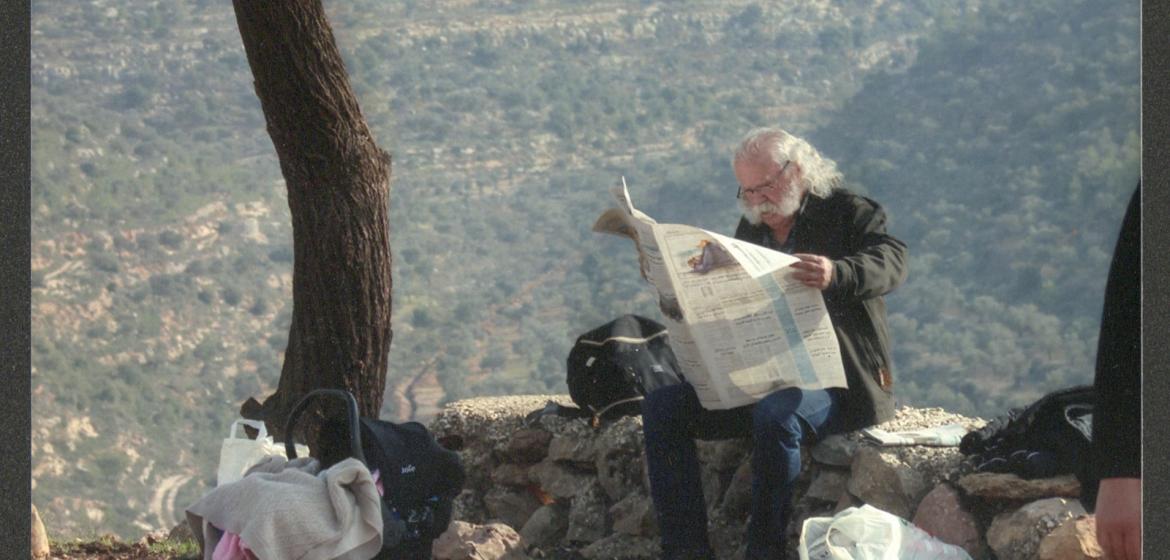
In this tribute, his son celebrates the actor and theatre-maker Adel Tartir’s relentless belief in theatre as liberatory practice—a legacy that endures beyond his death.
With his passing on July 10, 2025, the artist, storyteller, and guardian of the Sandouq El-Adjab (eng.: Wonderbox), Adel Tartir, left a theatrical imprint to preserve and celebrate. For more than half a century, he devoted his life to the theater and laid the founding pillars of the contemporary Palestinian theatre movement. From Al-Saqifa Theatre to Balaleen Troupe, and later the Sandouq El-Ajab Theatre, he believed that genuine, committed theatre—born of and belonging to the people—plays a mobilizing, educational, and liberating role. Tartir understood theatre as an ongoing creative and resistant engagement. He repeated time and again: “We live theatre, we breathe it, we walk it, we dance it, we sleep it.”
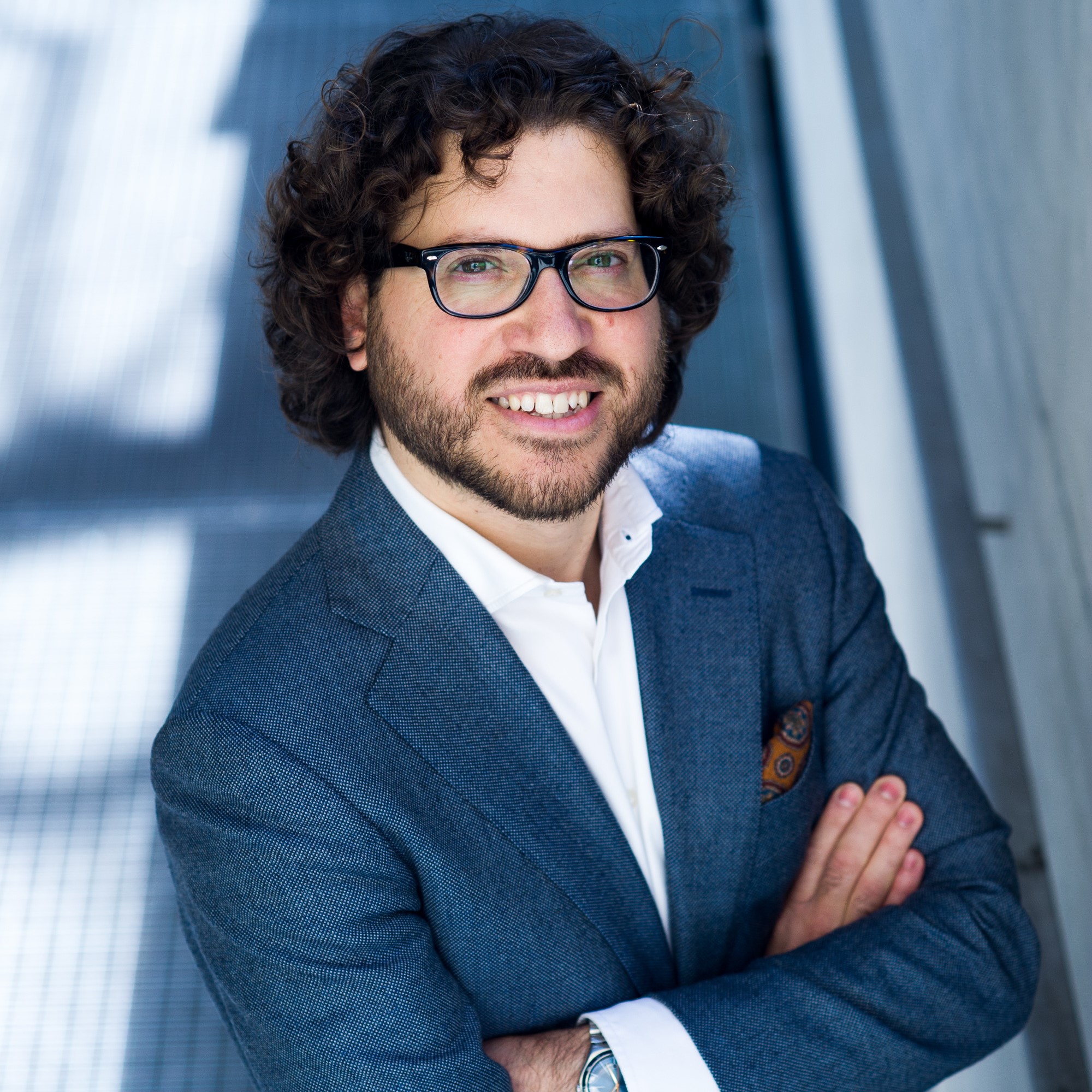
On this occasion, I want to focus not only on the artist but on the man himself, writing as his eldest son, friend, and colleague. Forty years of warmth, passion, love for theatre, hope, determination, creative struggle, and shared pride.
A lifetime of contributing to Palestinian culture
In 1980, he wrote, directed, and acted in the first fully Palestinian monodrama, Ras Ros (eng.: Head Heads). The play focused on a garbage collector, played by Adel, who imitated multiple characters on stage representing different segments of society. In contrast to all these people, the garbage collector was working on raising a child, endowing him with the ideal qualities he hoped would bring about revolution, justice, and equality for all.
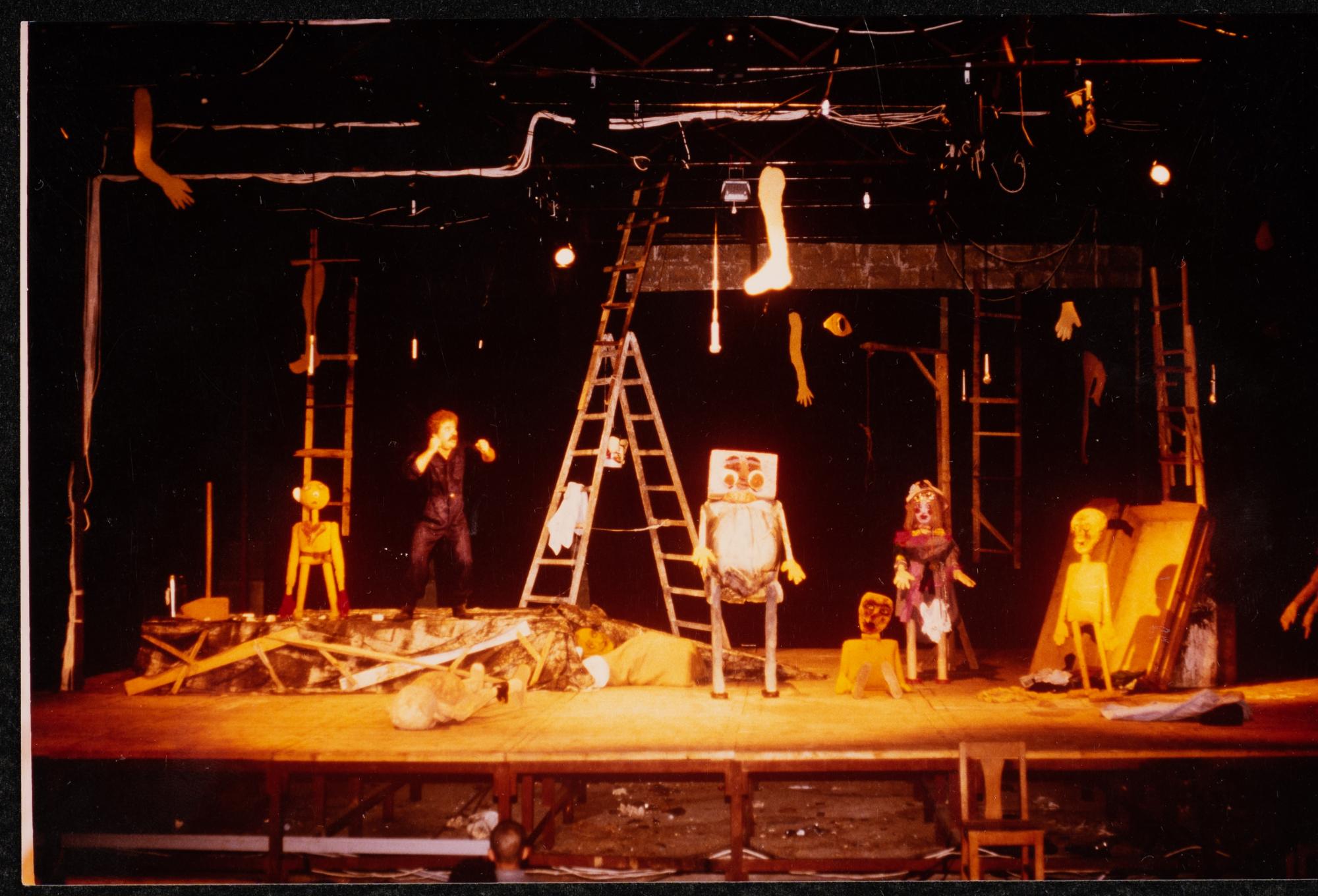
He created a unique theatrical school that made Ras Ros one of the most important classics of Palestinian theatre. Other plays by him include al-Atama (eng.: Darkness) and Lamma Injannina (eng.: When We Went Mad), and after it al-Ama wal-Atrash (eng.: The Blind and the Deaf), al-Qubba wan-Nabi (eng.: The Hat and the Prophet), and many more. From suffering, he birthed creativity; from pain, he brought forth hope.
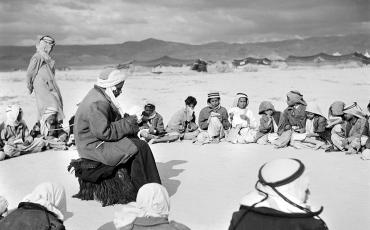
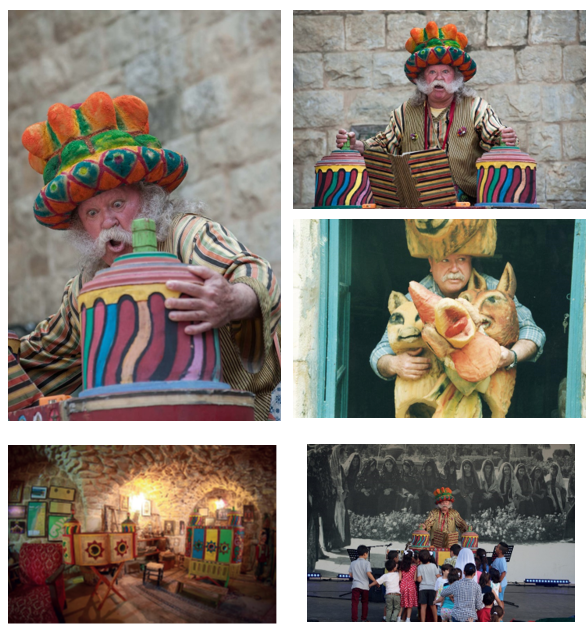
Additionally, he was also a pioneer of children's theatre by creating the character Abu Al-Ajab, which became the namesake for his new theatrical school. Over the last three decades, he designed, produced, and developed twelve Sandouq El-Ajabs (eng.: wonderboxes) of varying sizes, shapes, and mechanisms to celebrate and tell the Palestinian story. The Sandouq El-Ajabs are intricate apparatuses that have been used as storytelling devices since the beginning of the 19th century. They were particularly present in the Levant region. By using these devices, he served as a guardian of Palestinian storytelling and cultural heritage.
Memories of a deeply human artist
Let's start with his heart. It was a heart marked by numerous stents, irregular beats, and leaking valves. A famous doctor even mistakenly attached a stent that never opened, making his ramus artery a frequent topic in his conversations. Despite all this, the warmth and love of his heart were his most beautiful traits—acted upon both on stage and behind the scenes.
His voice was a melody. His hair and mustache told a story. His rounded belly was both the site of daily insulin injections and a playful target for his grandchildren. For seventeen years, he injected over 1,231 doses of insulin, costing over 104.635 Shekels—around 31.000 US-Dollars—and kept every used needle in a wooden box, intending to use them in his final performance. Truly, he was a brilliant mind.
He had not finished formal schooling, but he was a school in himself. He had not studied theatre at a fine arts academy, yet he founded several theatrical schools. His library amazed me: he moved from Kafka to Sadallah Wannous to Abdel Latif Aqel to Sharif Kananeh, and beyond—from Maghrebi to Gulf theatre, from Latin American to European theatre. This theatrical library, which revealed itself after his death, made me fall in love with his eyes that had seen all that is pure and beautiful.
A great loss for the community
Adel Tartir was born in the village of Rafat, between Jerusalem and Ramallah, in August 1951. He is originally from Al-Lydd, where his family was displaced and ethnically cleansed during the Nakba of 1948 and moved to Ramallah.
Walking the streets of Ramallah after his passing, I cannot help but wonder: Could it be that all this was a gruelling rehearsal for your crowning performance, my father?
Abu Dawoud is still waiting to sell you your daily newspapers; pharmacist Rola still has your medicines ready; Hanna the greengrocer still has your tomatoes, cucumbers, and local squash; Zaybaq still has your zaatar and sesame; El-Haj and your relatives are still waiting in the carpentry shop; Abu Alaa still waits every Friday with sea bream and mullet; photographer Sami still awaits your forced break; Sameeh the baker and the neighborhood kids are still ready to shout: “Abu Al-Ajab is here!” The street cleaner still waits for your daily “Bless your hands, Ahmad”; Abu Mohammed still expects you to ask about his family in Gaza; the intellectuals at Café Al-Insherah still await your greetings; and we wait for you in your lovely little home, to share your daily rituals.
His legacy lives on
I imagine him now, greeting the characters of Ras Ros, checking on his Sandouq El-Ajabs, planting a smile on a child's face. I can see him passionately calling on fellow theatre actors to unite, advocating for a national theatre, an active union. In my memory, he is listening to children before adults: speaking to a little girl in a small village near Hebron or a boy in Jalazone refugee camp and telling stories in Nazareth. I still see him performing, lecturing, and storytelling in Amman, Baghdad, and Tunis–inspiring storytellers from Khartoum, Algiers, and Kuwait. I see all this and beyond, and I adore him for it.
As always, he was ahead of us in vision—like Naji al-Ali's Handala drawing, facing a tomorrow that had yet to come. Was it coincidence that Naji al-Ali's poster adorned his workshop, and that he carved Handala in oak alongside Abu Al-Ajab? He prepared for his departure, directing his final performance: bidding farewell to friends, taking his usual walk, planting a grapevine at his door, bringing out his Sandouq El-Ajabs for exhibition, buying my mother a full kilo of the sesame she loves, dreaming of returning to his city of Al-Lydd, singing: “I vow to you, my home, if we return as we were, I will plant you and adorn you with dates and henna, oh my father.”
Adel Tartir departed assured that his legacy is safe and left with a smile. He closed his eyes peacefully, whispering to me as I laid beside him, holding the hand I loved and kissing his broad forehead: “Don't forget, my son—our life is theatre, and theatre is our life.”
Adel Tartir was not only my father; he was truly the father of the Palestinian theatre.
A longer version of this piece was originally published in Arabic in Majallat al-Dirasat al-Filastiniyya, and in English in the Blog of the Institute of Palestine Studies. Dis:orient is publishing an edited version with the kind permission of the author.