Thousands of people in Lebanon have been killed in Israeli attacks so far, with nearly a fitfth of the country’s population displaced. The relief organization Basmeh & Zeitooneh speaks with dis:orient about war, displacement, and solidarity.
Since October 2023, Israel has conducted a series of airstrikes on Lebanon as part of its war on Hezbollah, alongside the Genocide in Gaza. Since the latest escalation in March, more than 2000 people have been killed and approcimately 1.2 million displaced. The airstrikes are accompanied by a ground invasion of southern Lebanon. Basmeh & Zeitooneh are one of the biggest refugee-led organizations in Lebanon. Ralph Haddad is in charge of public relations.
Ralph, Basmeh & Zeitooneh is providing emergency response, but aid workers on the ground are themselves affected. Is there still a division of roles between those affected and those providing help?
It depends on who the aid worker is. When aid workers are from the affected communities, there is no distinction - the psychological toll is the same, except that they still have to continue working. Expatriate aid workers, on the other hand, are able to psychologically check in and out of the situation, as they are not Lebanese, Palestinian or Syrian.
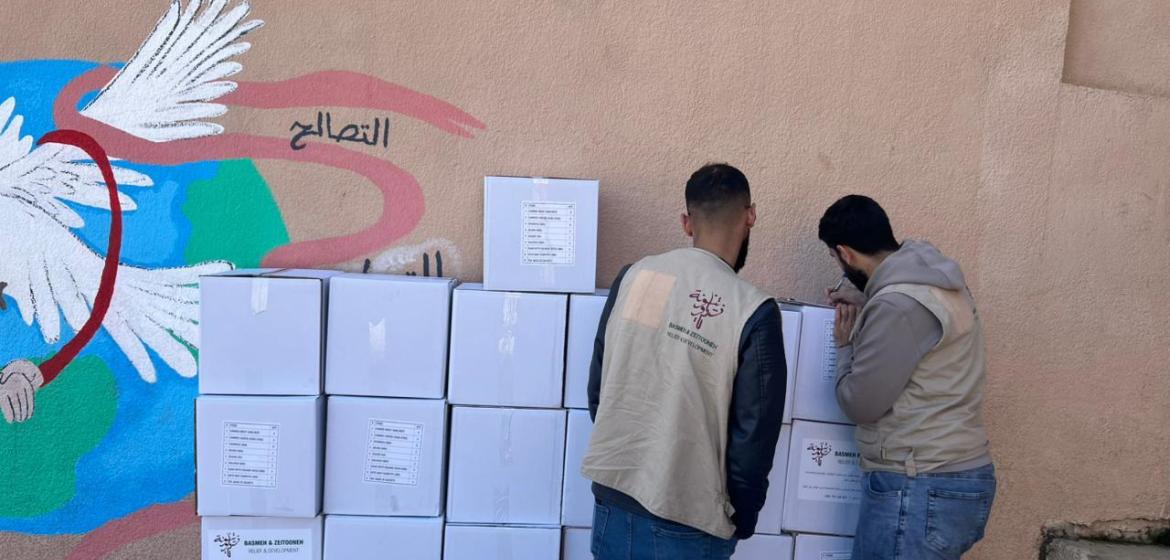
Regarding the emergency response, there is very little coordination between bigger, international organizations and local organizations. What happened in the past few weeks - and this is a broader trend - is that, at the very onset of a new wave of bombardments, larger organizations with more resources moved very quickly to “book” or reserve specific shelters near urban areas. This is because those locations are much more accessible to their staff. In contrast, local organizations need more time to coordinate and gather financial resources before they can carry out their emergency responses. As a result, they often must operate under higher risk and in more dangerous areas.
What is the most urgent need in the light of the recent large-scale attacks by Israel?
There are no clear priorities. Due to the reactive rather than proactive programming of the government, there is an urgent need to find alternative shelters and housing. There is also a significant need for hygiene facilities for people living on the streets.
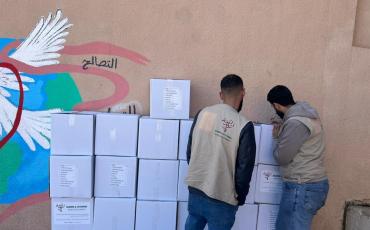
Furthermore, adequate food aid needs to be distributed. We have been getting reports that the food aid is of poor quality and insufficient. We try to support people in cooking their own meals.
There is a particularly high need to support senior citizens and children. Many children are out of school, confined to overcrowded spaces with no access to play or leisure activities. Seniors are not able to leave areas that received evacuation orders due to their age and limited mobility - especially those living in remote areas. Currently, there are no clear plans in place to support these populations.
How can you provide people with information about where to go, considering that the situation on the ground is becoming increasingly unpredictable? Where are safe areas?
For us, it is a matter of meeting people where they are. We do not advise or dictate where they should go. There are no real safe areas. Especially since the scale of bombing just keeps getting wider. We had to cease our operations for a few days after the mass April 8th bombings, which killed over 300 people in under 10 minutes, because we cannot put our own staff at risk who themselves are displaced.
The pattern we are witnessing is that people are more inclined to stay in shelters close to their homes. Even if the northern areas such as Tripoli and Akkar are safer, many displaced people from the south or from Beirut are unwilling to make the trip. They fear not being able to return and are concerned about the logistical difficulties of travelling.
How does the constant fear of being attacked or having to flee affect the people you help?
The psychological toll is extremely high. People are not able to sleep because they do not know when the next strike is going to happen, nor whether the supposedly safe area is actually safe. The constant sound of fighter jets and surveillance drones creates extreme stress and a sense of paranoia.
It is a miserable situation for everyone, especially for the most vulnerable people in the population: those under evacuation orders, with low- to middle-income and big households. For example, it is not easy to fit eight family members in a car with all their belongings. To travel somewhere unknown where they might not feel welcomed or may be put under scrutiny simply for being displaced.
I feel that, as Lebanese people, we have lost the ability to describe these feelings. Language really fails at describing any of this.
Many people had already been displaced.
Lebanese and non-Lebanese alike, who were displaced in the first wave of the Israeli aggressions in 2024 have still not been able to return to their villages, as Israel has continuously violated the ceasefire.
A large part of them is just sick and tired of living in a country that is defenseless against the constant bombardment. For many, it feels like the world has turned its back on them: no one is doing anything to stop the aggressor that has been violating several aspects of international law for decades.
Your organization is founded and led by refugees. What is the benefit of this?
Outside of wartime, it is a benefit because it brings us closer to the communities we want to serve. Usually, the field team comes from the same communities that we aim to support. It creates a kind of rapport when the aid worker is familiar to them, for example, when they speak the same dialect. We also try to build socially cohesive teams of local Lebanese and local refugees working together. This is how, over time, we have built trust.
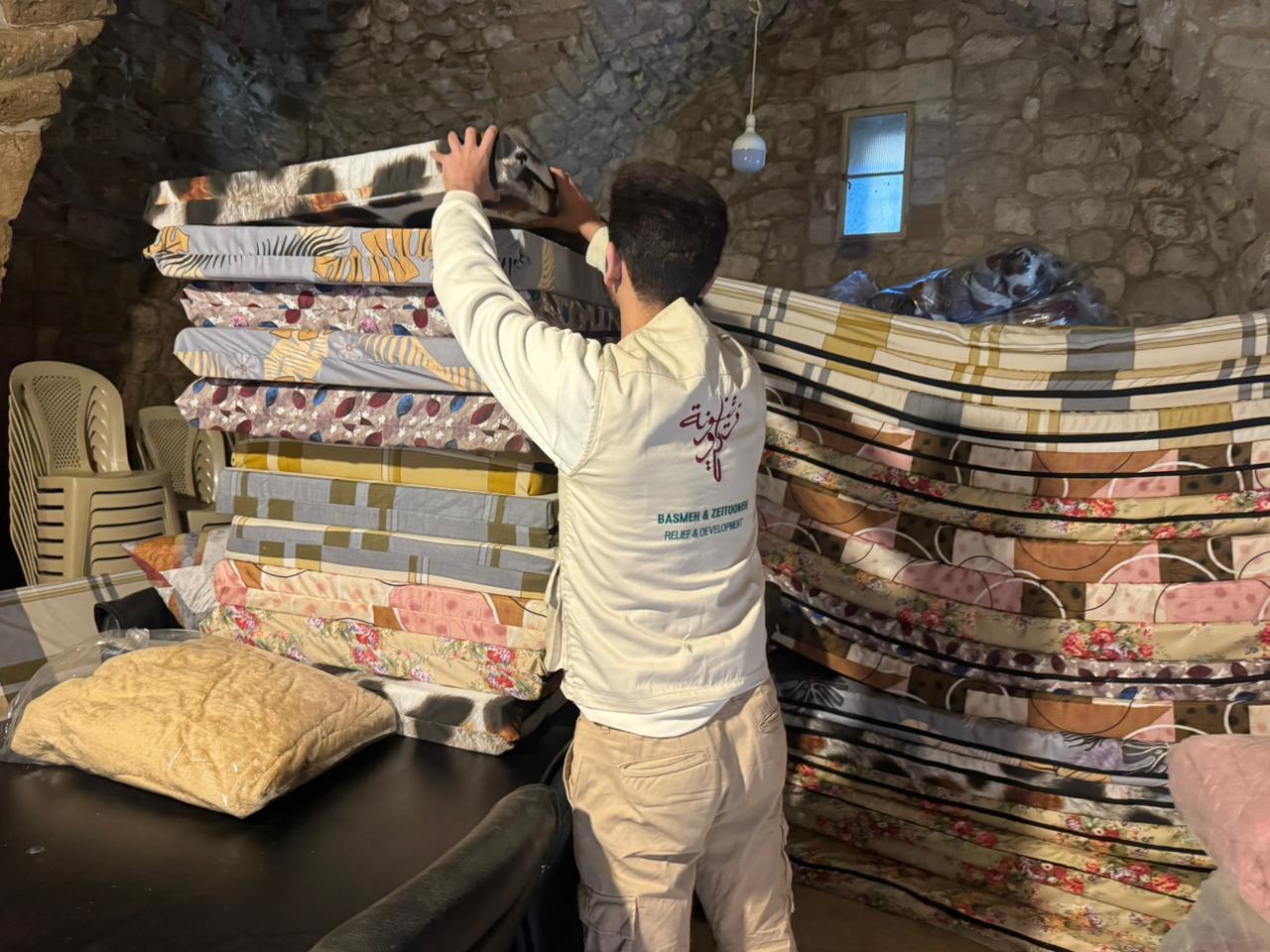
At the state level, however, this approach is still met with a lot of suspicion. The host community often feels that the emergency response is inadequately geared towards Syrians rather than Lebanese. Our programming always takes the Lebanese community into account. But it is difficult to fight misinformation by the media.
How is the situation of migrant workers and refugees?
Most migrant workers lost their jobs and homes and find themselves with no access to shelter. We are witnessing municipalities fueling tensions between the local community and non-Lebanese residents by denying them shelter, forcing them to move from place to place, or to leave the municipality altogether.
Migrant workers and Syrian refugees have, in many cases, been displaced two or even three times. While a significant number of Syrians returned to Syria, many others cannot go back. The response for these populations is extremely inadequate, they are being retraumatized.
How do people perceive the current political situation?
There are differing opinions. A small portion of the population are sympathetic towards Israel and critical of the displaced people. This is because Israel is targeting so-called safe towns, where displaced people are sheltered, to increase tensions between communities in Lebanon, particularly to divide displaced people, refugees, migrant workers and the so-called host community.
Other than this, there are contrasting opinions on who is responsible for the outbreak of this war. Even as Israel continues to bomb indiscriminately, a small number of Lebanese still believe that it is Hezbollah's fault that the war started. At the same time, displaced people are blaming Israel for their displacement.
How does all of this affect solidarity among people?
There is a lot of mutual aid. It is very grassroots and horizontal: a lot of community kitchens and mutual aid funds are being set up by locals and the diaspora. At the same time, some groups are viewed with suspicion, and tensions persist.
How can people outside of Lebanon best support those affected by the war?
People can seek out Lebanese people in their communities who are actively promoting or organizing mutual aid and share those in their networks. Also, hosting fundraiser events is extremely beneficial, no matter how small.
I want to urge the people who think that this situation does not concern them to think of how complicit their governments are and what they can do against this at the policymaking-level: what are channels of communication with your elected officials? Probably there are organizing strategies you can engage in, such as writing letters, campaigns, calls to policymakers.
I know the German government is not extremely sympathetic [towards the people in Lebanon and the region]. Germans need to realize: their government is directly complicit in the ongoing campaign, and that elected officials should be held accountable. People do have the power to change the situation. They should use it.